Eye Shape Detector
What eye shape do I have? Measured, not guessed.
Drag & drop a photo here
Front-facing · eye level · neutral face · good light
Measured in your browser — your photo never leaves your device
Same photo, same score — measured, not guessed.
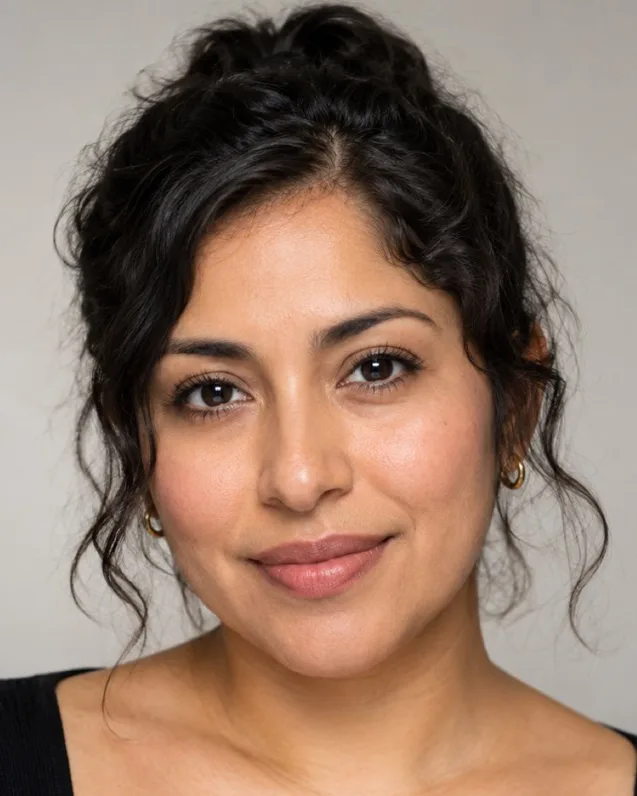
AI-generated sample face · real measurements
Sample result
eye shape
Upturned
Balanced spacing- Eye height ÷ width0.36
- Canthal tilt+8.4°
- Eye gap ÷ eye width1.20
For adults 18+, for entertainment and self-improvement. Scores reflect geometry in one photo, not your worth. Terms
How it works
- 1Upload a photoA straight-on photo at eye level, neutral face, good light. Or take a selfie.
- 2We measure in your browser478 landmarks are mapped on your device and small head turns are corrected. The photo is never uploaded.
- 3Get your eye shape resultSee the numbers with the lines drawn on your photo. Same photo, same result, every time.
This eye shape detector labels your eyes almond, round, upturned, downturned or narrow, and close-set, balanced or wide-set. It measures eye height to width, the tilt of each eye and the gap between your eyes from one straight-on photo, in your browser.
Types of eye shapes
Eye shape is described by a few separate features: the outline of the opening, the tilt, the eyelid, and how far apart the eyes are. This detector measures the first, second and fourth from your photo.
| Eye shape | What it looks like | How we detect it |
|---|---|---|
| Almond | Longer than tall, slightly pointed at the corners | Eye height 26–38% of eye width, tilt 0–7° |
| Round | Tall opening, more of the iris and white visible | Eye height 38% of width or more |
| Narrow | Low, long opening | Eye height under 26% of width |
| Upturned | Outer corner clearly higher than inner corner | Canthal tilt +7° or more |
| Downturned | Outer corner lower than inner corner | Canthal tilt below 0° |
Spacing is reported separately: close-set, balanced or wide-set, based on the gap between your eyes compared with the width of one eye.
What eye shape do I have?
Upload a straight-on photo with your eyes open and relaxed, looking into the lens. The detector maps the outline of each eye in your browser, levels your head, and measures the height and width of each opening, the tilt of each eye and the gap between them. It then labels your eye shape and spacing and draws the outlines on your photo.
Expression matters a lot here. Smiling pushes the lower lids up and makes eyes look narrower and more upturned; raised brows open them up and make them look rounder. A neutral face gives the shape you actually have.
Hooded eyes and monolids
Hooded eyes have a fold of skin from the brow bone that covers part or all of the eyelid crease, so little mobile lid shows when the eyes are open. Monolids have no visible crease at all. Both are about the eyelid rather than the outline of the eye, and they combine with any shape above — you can have hooded almond eyes or monolid round eyes.
A photo landmark model cannot reliably see the eyelid crease, so this detector does not label hooded eyes or monolids. A quick self-check: look straight into a mirror with a relaxed face. If you cannot see your eyelid crease, or the skin above it touches your lashes, your eyes are hooded or monolid.
Makeup and glasses for your eye shape
- Almond — the most flexible shape; most liner and shadow styles work.
- Round — liner extended outward and shadow concentrated on the outer corners elongates the eye.
- Downturned — wing the liner upward and keep the outer lower lash line light to lift the outer corner.
- Upturned — balance with a little shadow or liner along the outer lower lash line.
- Hooded — apply shadow slightly above the natural crease with eyes open so it shows; thin, tightlined liner works better than a thick line.
- Wide-set or close-set — shading the inner corners darker brings wide-set eyes closer; brightening the inner corners opens up close-set eyes. Frames with a dark bridge or a clear bridge do the same.
For exact angles, see the canthal tilt test; for the looksmaxxing view of eye shape, the hunter eyes test.
Frequently asked questions
What are the main eye shapes?
Almond, round, narrow, upturned and downturned describe the outline and tilt of the eye; hooded and monolid describe the eyelid; close-set and wide-set describe spacing. Most people combine one of each, such as almond, hooded and balanced.
What is the most attractive eye shape?
There is no single one. Almond eyes with a slightly positive tilt are often cited in beauty guides, but round, hooded and monolid eyes are all common among people considered very attractive. Brows, lashes, under-eye area and expression matter as much as shape.
Can this tool tell if I have hooded eyes?
No. Hooding depends on the eyelid crease, which a photo landmark model cannot see reliably. Check in a mirror: if the skin above your crease covers most of the lid when your eyes are open, they are hooded.
Why does my eye shape look different in some photos?
Smiling lifts the lower lids and narrows the eyes, raised brows open them, and a camera above or below eye level changes the apparent tilt. Use a neutral face at eye level for the result that matches your eyes.
Do you upload or store my photo?
No. Scoring and measurement run entirely in your browser: the face model downloads to your device and your photo never leaves it. Only the AI Analysis tools (such as age or color analysis) send a photo to our server, and they say so before you upload.