Face Symmetry Test
How symmetrical is your face? A score for each feature.
Drag & drop a photo here
Front-facing · eye level · neutral face · good light
Measured in your browser — your photo never leaves your device
Same photo, same score — measured, not guessed.
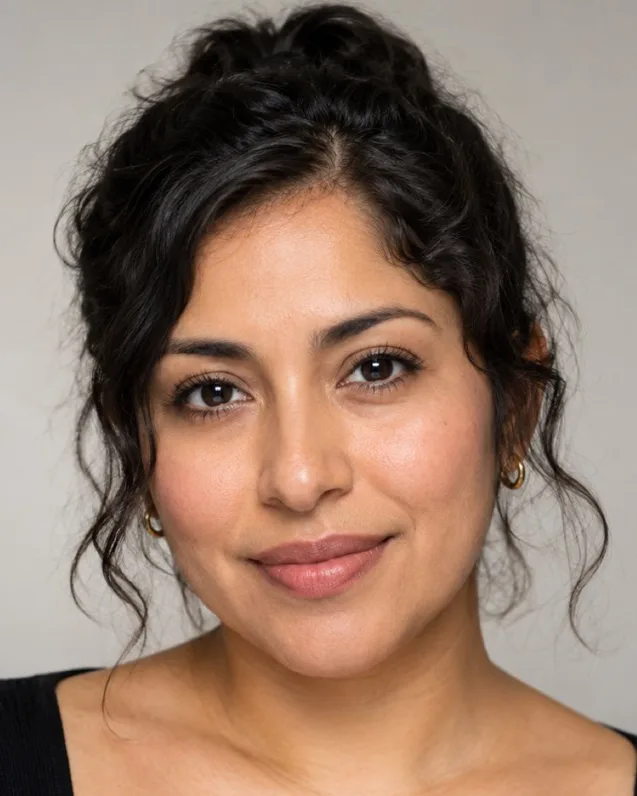
AI-generated sample face · real measurements
Sample result
/ 100 symmetry
92
Highly symmetrical- Eyes94/100
- Brows90/100
- Nose99/100
- Mouth95/100
- Jaw84/100
For adults 18+, for entertainment and self-improvement. Scores reflect geometry in one photo, not your worth. Terms
How it works
- 1Upload a photoA straight-on photo at eye level, neutral face, good light. Or take a selfie.
- 2We measure in your browser478 landmarks are mapped on your device and small head turns are corrected. The photo is never uploaded.
- 3Get your face symmetry resultSee the numbers with the lines drawn on your photo. Same photo, same result, every time.
This face symmetry test fits your facial midline, mirrors 27 landmark pairs across it and measures how far each pair is from a perfect match. You get an overall symmetry score out of 100 and separate scores for eyes, brows, nose, mouth and jaw.
What is facial symmetry?
Facial symmetry is how closely the left half of your face mirrors the right half. On a perfectly symmetrical face, every feature on one side — eye corner, brow tail, nostril, mouth corner, jaw angle — would sit at exactly the same height and the same distance from the midline as its partner on the other side.
No real face is like that. Symmetry is a matter of degree, and the differences that a measurement picks up are usually a few percent of face width: one eye a touch higher, a nose that leans slightly, a jaw that is a little fuller on the side you chew with.
How this face symmetry test works
The test runs in your browser in four steps:
- Landmarks. A face model places 478 points on your face, including the corners of your eyes, brows, nostrils, lips and the outline of your jaw.
- Head-angle correction. Turning your head even a few degrees makes the near side look wider. The test estimates your head's 3D angle and rotates the points back to a straight-on view before measuring.
- Midline. Instead of assuming the centre of the photo, it fits your own facial midline through 20 central points — forehead, bridge and tip of the nose, lips and chin — so a nose or chin that sits slightly off-centre is measured, not hidden.
- Mirroring. 27 pairs of left and right points are mirrored across that midline. The distance between each mirrored point and its partner, as a percentage of face width, is the asymmetry. The score is 100 minus that deviation.
You get an overall symmetry score out of 100 and separate scores for the eyes, brows, nose, mouth and jaw, so you can see where the difference actually is. The midline and the paired lines are drawn on your photo.
Is it normal to have an asymmetrical face?
Yes — completely. Everyone's face is asymmetrical to some degree. Clear, straight-on photos usually score in the 90s on this test, and differences of that size are hard to see in person because people look at faces as a whole, not point by point.
Symmetry does play a part in attractiveness. Studies on face perception have repeatedly found that more symmetrical faces tend to be rated a little more attractive on average. But the effect is modest, and faces made perfectly symmetrical by mirroring one half often look strange or artificial rather than better. Small asymmetries are part of what makes a face look natural and recognisable.
Why is my face asymmetrical?
Most facial asymmetry is simply how you grew. Common contributors include:
- Development and genetics — the two sides of the skull and jaw never grow identically.
- Teeth and bite — chewing mostly on one side, missing teeth or a bite that shifts the jaw can make one side of the jaw muscle fuller.
- Habits — always sleeping on the same side or resting your chin on one hand is often blamed, though the evidence is weak.
- Ageing — skin, fat and bone change unevenly over time.
- Injury or dental work on one side.
Asymmetry that appears suddenly — one side of the face drooping, an uneven smile, an eye that will not close — is different. That can be a sign of facial nerve problems or a stroke and needs urgent medical attention, not a symmetry test.
How to fix an asymmetrical face
Start by checking whether there is anything to fix. Take two or three photos at eye level from arm's length in even light and run them through the test. If your score stays in the 90s, what you notice is most likely a normal asymmetry that the camera exaggerates.
If you still want to reduce it, the options run from free to medical:
- Grooming. Shaping the brows to the same height, changing your hair parting, and beard shaping all shift where the eye reads the centre of the face.
- Makeup. Contour and highlight can even out cheek and jaw fullness, and liner can balance eyes of slightly different shapes.
- Chewing and habits. Chewing on both sides helps if one jaw muscle is noticeably bigger. Face exercises are widely promoted, but there is little evidence they change bone-driven asymmetry.
- Dental and orthodontic care when the bite or jaw position is the cause.
- Cosmetic treatments such as botulinum toxin for an enlarged jaw muscle or fillers for volume differences, and surgery for larger skeletal asymmetry. These should be planned with a qualified doctor or surgeon.
Why your face looks more asymmetrical in photos
Many people first notice their asymmetry in selfies. There are three reasons. The mirror shows you a flipped face you are used to, while a photo shows the un-flipped version, so every small difference looks "wrong". Front cameras held close exaggerate whatever is nearest the lens. And a slight head turn makes the near side of the face look wider.
That is why this face symmetry test corrects head angle and shows the photo check under your result. For results you can compare, keep the same distance, light and camera height each time.
Symmetry is one of eight areas in the attractiveness test. For proportions, try the golden ratio calculator and the facial thirds test; for the eyes alone, the canthal tilt test.
Frequently asked questions
How is face symmetry measured?
We fit your facial midline from 20 central landmarks, mirror 27 pairs of left and right landmarks (eyes, brows, nose, mouth and jaw) across it, and measure how far each pair is off as a percentage of face width. The score is 100 minus that deviation, shown per region.
What is a normal symmetry score?
Perfect symmetry does not exist in real faces. Clear, straight-on photos usually score in the 90s on this test; small differences between regions are normal and usually invisible in person.
Why does my symmetry change between photos?
Turning your head even a few degrees makes one side look wider. We correct for slight head turn using the 3D face pose, but a straight-on photo at eye level with even lighting is still the most reliable.
Can facial exercises fix an asymmetrical face?
There is little evidence that face exercises change asymmetry that comes from bone structure. Chewing on both sides can help when one jaw muscle is bigger; grooming, hair parting and makeup change how symmetrical a face reads; and dental, injectable or surgical options exist for larger differences.
When is facial asymmetry a medical concern?
When it appears suddenly — one side drooping, an uneven smile or an eye that will not close. That can signal a facial nerve problem or a stroke and needs urgent medical help. Long-standing, gradual asymmetry is normal.
Is 90% facial symmetry rare?
No. On this test, clear straight-on photos usually score in the 90s, because real faces differ between sides by only a few percent of face width. Scores in the 80s usually point to a turned head or uneven lighting more than to the face itself.
Can ChatGPT analyze my face symmetry?
A chatbot can comment on a photo, but it does not measure landmark positions and its answer can change each time. This test mirrors 27 landmark pairs across your midline and returns the same score for the same photo.
Will the same photo always get the same score?
Yes. Your score is calculated from fixed measurements with a fixed formula, not guessed by a chatbot, so the same photo always returns the same result. Different photos can differ because angle, distance, expression and lens change where your features appear.