Facial Thirds Test
Upper, middle and lower thirds, measured as percentages.
Drag & drop a photo here
Front-facing · eye level · neutral face · good light
Measured in your browser — your photo never leaves your device
Same photo, same score — measured, not guessed.
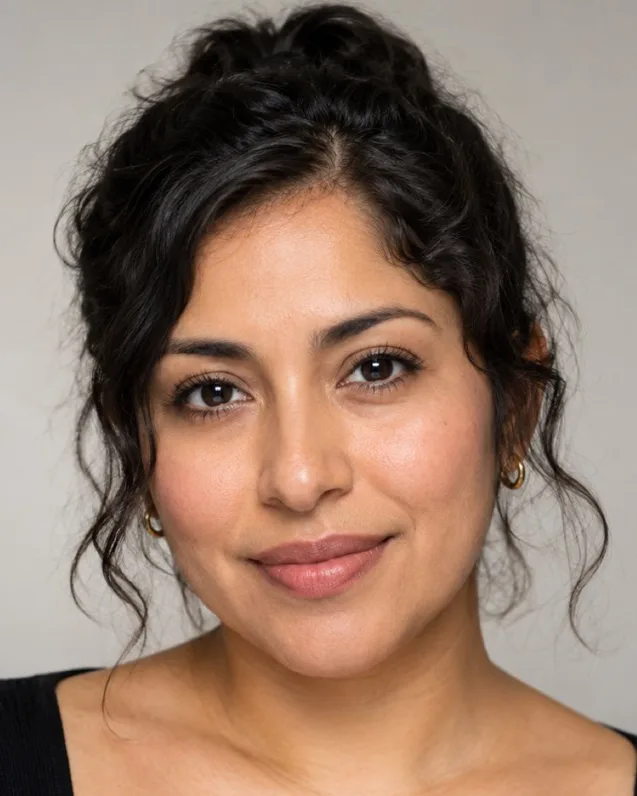
AI-generated sample face · real measurements
Sample result
upper · middle · lower (%)
22 · 41 · 38
Longer middle third- Upper third21.5%
- Middle third40.8%
- Lower third37.8%
- Middle ÷ lower third1.08
For adults 18+, for entertainment and self-improvement. Scores reflect geometry in one photo, not your worth. Terms
How it works
- 1Upload a photoA straight-on photo at eye level, neutral face, good light. Or take a selfie.
- 2We measure in your browser478 landmarks are mapped on your device and small head turns are corrected. The photo is never uploaded.
- 3Get your facial thirds resultSee the numbers with the lines drawn on your photo. Same photo, same result, every time.
Facial thirds divide the face at the brow and the base of the nose. This test measures all three thirds from your photo as a percentage of face height and compares the middle and lower thirds, the pair that matters most for balance.
What are facial thirds?
Facial thirds split the face into three horizontal sections: the upper third from the hairline to the brows, the middle third from the brows to the base of the nose, and the lower third from the base of the nose to the chin. Classic proportion guides treat roughly equal thirds as balanced. Within the lower third, the upper lip is usually about a third of the height and the lower lip and chin the other two thirds.
How to measure facial thirds
By hand, you need a straight-on photo and three horizontal lines: at the brows (glabella), at the base of the nose and at the chin, plus the hairline. This test places them from 478 landmarks after levelling your head and gives each third as a percentage of face height.
One limitation: the face model's top point is the highest part of the forehead it can see, not your hairline, so the upper third reads smaller than a ruler measurement would. That is why the score compares the middle third with the lower third, where both ends are clear landmarks. A ratio between 0.94 and 1.06 is shown as balanced.
Long or short lower third: what it means
- Longer lower third — the chin and jaw take up more of the face. It often reads as strong and mature; a beard or a fuller hairstyle at the top can balance it.
- Longer middle third — a longer nose area. Looksmaxxing forums call a short midface desirable; styling the brows lower or adding volume at the jaw can balance a long one.
- Large upper third — a tall forehead; fringes and curtain bangs are the usual fix.
Thirds work together with the rule of fifths (horizontal balance) and the midface ratio.
Do equal facial thirds make you attractive?
Balanced thirds are one sign of a harmonious face, but they are not a requirement. Many attractive faces have a slightly shorter middle third or a slightly longer lower third, and small differences are invisible in person. Thirds are weighted at 12% in the attractiveness test. For an accurate measurement, take the photo straight on at eye level: tilting your chin up shortens the lower third, tilting it down lengthens it, and the test only corrects small tilts.
Frequently asked questions
What are the facial thirds?
The facial thirds split the face into upper (hairline to brows), middle (brows to the base of the nose) and lower (base of the nose to chin) sections. Classic proportion guides treat roughly equal thirds as balanced.
Why is my upper third smaller than the others?
The face model stops at the top of the forehead it can see, not at your hairline, so the upper third reads smaller than a ruler measurement would. That is why we score the middle third against the lower third, where both ends are clear landmarks.
What is a balanced middle-to-lower third ratio?
A middle third about the same height as the lower third — a ratio between 0.94 and 1.06 on this test — is shown as balanced. A smaller ratio means a longer lower third, a larger one a longer middle third.
Will the same photo always get the same score?
Yes. Your score is calculated from fixed measurements with a fixed formula, not guessed by a chatbot, so the same photo always returns the same result. Different photos can differ because angle, distance, expression and lens change where your features appear.