PSL Scale Test
Your PSL rating on the 1–8 scale, from measured facial geometry.
Drag & drop a photo here
Front-facing · eye level · neutral face · good light
Measured in your browser — your photo never leaves your device
Same photo, same score — measured, not guessed.
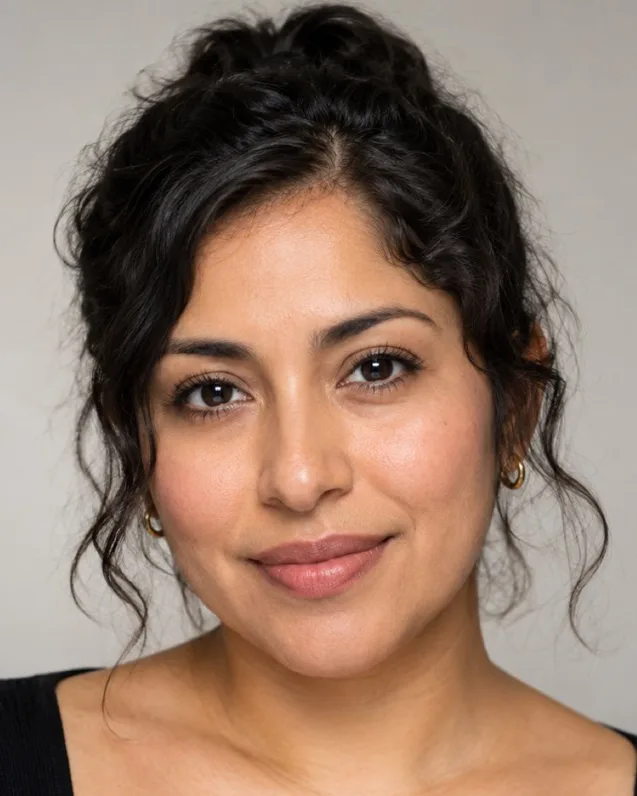
AI-generated sample face · real measurements
Sample result
7.0 / 10
Attractive
- Eyes98
- Symmetry80
- Golden Ratio97
- Jawline92
- Facial Thirds82
For adults 18+, for entertainment and self-improvement. Scores reflect geometry in one photo, not your worth. Terms
How it works
- 1Upload a photoA straight-on photo at eye level, neutral face, good light. Or take a selfie.
- 2We measure in your browser478 landmarks are mapped on your device and small head turns are corrected. The photo is never uploaded.
- 3Get your psl scale resultSee the numbers with the lines drawn on your photo. Same photo, same result, every time.
The PSL scale rates looks from 1 to 8, with 4 as average. This PSL test measures symmetry, proportions, eyes and jawline from 478 landmarks, converts the result to a PSL score and names your tier (LTN, MTN, HTN, Chadlite). It runs in your browser and never uploads the photo.
What is the PSL scale?
PSL is a 1–8 rating of facial attractiveness that grew out of looksmaxxing forums. The letters come from the names of three early forums (PUAhate, SlutHate and Lookism), but today "PSL" just means the scale. Its defining feature is that it is strict: 4 is the middle, 5 is already clearly good-looking, and 7–8 is reserved for the rarest faces, mostly top models.
That is very different from the everyday 1–10 scale, where people casually call an average face a 6 or 7. A useful rule of thumb is that PSL runs about two points lower than a typical 1–10 rating in the middle of the range.
PSL scale chart: tiers and meanings
| PSL | Men | Women | Meaning |
|---|---|---|---|
| 3 | LTN | LTB | Low-tier normie / becky — slightly below average |
| 4 | MTN | MTB | Mid-tier — the average face |
| 5 | HTN | HTB | High-tier — clearly above average |
| 6 | Chadlite | Stacylite | Very attractive; stands out in most rooms |
| 7 | Chad | Stacy | Model-level |
| 8 | Gigachad | Gigastacy | Theoretical top of the scale; almost nobody is rated here |
The forum labels below 3 are insults, so this test does not use them. "Normie" and "becky" simply mean an ordinary person. Many people also write half-steps such as "HTN–Chadlite", which is why the result shows a range as well as a single number.
How this PSL scale test calculates your rating
Forum PSL ratings are opinions, and they swing with the photo and the rater. This test replaces the opinion with measurements:
- It maps 478 landmarks on your face in your browser and corrects small head turns and tilts.
- It scores eight areas — symmetry, eyes, jawline, proportions, facial thirds, golden ratio, dimorphism and harmony — against reference ranges for men or women.
- It combines them into a 1–10 score calibrated so a typical photo lands around 6, then converts that to PSL: PSL = 4 + (score − 6) × 0.9. A 6/10 face is a PSL 4 (MTN/MTB); an 8/10 face is about PSL 5.8, the HTN–Chadlite border.
Because the formula is fixed, the same photo always gets the same PSL rating. The full method and weights are on the methodology page.
Is the PSL scale accurate?
As a rough language for "how good-looking, compared with most people", it is useful, and it is popular because it forces honesty that a 1–10 scale does not. As a precise measurement, it is not. It mostly rates bone structure and harmony from one photo, it ignores skin, hair, style, expression and personality, and forum raters disagree with each other by a tier or more.
Treat a PSL result as a description of your facial geometry in one photo. Two straight-on photos taken the same way should land in the same tier; if they do not, the angle or lighting changed. Adding more photos to the test averages them and gives a steadier number.
How to raise your PSL rating
Bone structure changes little after your early twenties, but a lot of what shifts a rating is not bone:
- Body fat. Lower facial fat sharpens the jawline and cheekbones, which feeds the jawline, proportions and dimorphism scores.
- Grooming. Brow shape, beard shape and a haircut that suits your face shape change how proportions read.
- Skin and sleep. Not measured here, but they change how people rate the same face.
- Photo setup. Eye-level camera, arm's length, neutral face — a bad angle can cost a whole tier.
To see which areas pull your score down, check the breakdown on your result, or try the looksmaxxing test, which ranks your features from strongest to weakest.
Frequently asked questions
What is the PSL scale?
PSL is a 1–8 looks rating used in looksmaxxing communities, where about 4 is the middle. Common tier names are LTN/LTB (low-tier normie/becky, around 3), MTN/MTB (mid-tier, around 4), HTN/HTB (high-tier, around 5), Chadlite/Stacylite (around 6) and Chad/Stacy (7+).
How does this PSL test work?
It measures 478 facial landmarks in your browser, scores eight areas (symmetry, thirds, golden ratio, eyes, jawline, proportions, dimorphism and harmony) and converts the result to the 1–8 PSL scale with a tier name and range. It uses geometry only — skin, hair and grooming are not rated.
Is PSL the same as a 1–10 rating?
No. PSL tops out at 8 and is stricter: a 6/10 face is roughly a 4 (MTN/MTB) on PSL. Our home page gives the 1–10 score for the same measurements.
What does HTN, MTN and LTN mean?
They are PSL tiers for men: LTN is low-tier normie (about PSL 3), MTN mid-tier normie (about 4, the average) and HTN high-tier normie (about 5). The women's equivalents are LTB, MTB and HTB. Above HTN come Chadlite (6) and Chad (7).
What is an average PSL rating?
About 4 — MTN for men, MTB for women. A PSL 5 (HTN/HTB) is already clearly above average, and ratings of 7 and above are rare even among models.
Will the same photo always get the same score?
Yes. Your score is calculated from fixed measurements with a fixed formula, not guessed by a chatbot, so the same photo always returns the same result. Different photos can differ because angle, distance, expression and lens change where your features appear.